
P21S Wheel Cleaner 5L Gel
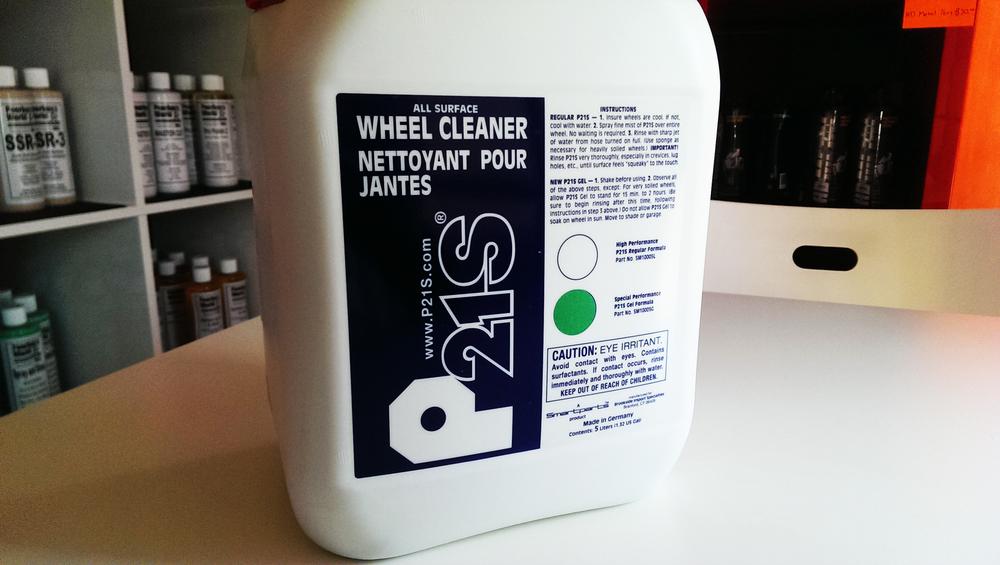


This 5 L canister supplies P21S Gel Wheel Cleaner for a detailing bay, multi-vehicle household or a vehicle that repeatedly accumulates heavy brake dust. Gel is the thicker of the P21S wheel cleaners. It holds onto spoke faces, recessed wheel centres and the inside of the barrel so the cleaner has time to work on deposits before rinsing. Five litres corresponds to ten 500 mL fills, making the size practical when you already use a compatible dispensing setup.
Dispense the gel into a clean, clearly identified applicator that can deliver the thicker liquid. Keep the bulk container closed between fills, and avoid returning leftover product or dirty rinse water to the canister. Before a wash, let the wheels cool and move the vehicle into shade. If the finish is unfamiliar or has been repaired, check the wheel maker’s care guidance and test the cleaner on an inconspicuous spot.
Cover the area evenly, including the backs of spokes that are accessible through the face. The gel can remain in contact for up to two hours according to P21S. Monitor the wheel, keep the product from drying and use a shorter contact time when the soil releases sooner. A soft sponge can loosen residue at the base of a spoke. Use a dedicated barrel brush for deeper areas, taking care to keep trapped grit away from the visible face.
Rinse each wheel with a firm stream of water. Work around the centre cap, valve stem, lug recesses and lower inside edge so gel and loosened brake dust have a clear path out. Inspect the finish while it is clean and decide whether any single area needs another pass. Dry with a dedicated wheel towel.
The non-acid, non-lye formulation is useful for wheels that see long intervals between washes or more dust from the brake pads. For fleet or shop use, marking the working bottle “Gel” helps the next person distinguish this longer-contact formula from the Regular wheel cleaner. Store clean wash media separately from used brushes and towels. Keep the dispensing equipment clean between refills.


