


How to Clean Cloth Car Seats and Carpets Without Water Rings
CARZILLA Detailing Guides · 9 minute read · Photography by GYEON
A coffee spill on a cloth seat can leave two marks. The coffee makes the first one. The second is the pale ring that appears the next morning where the cleaning stopped. On cloth seats, carpet and floor mats, pick up the loose dirt first. Use just enough moisture to lift the spill, then look over the whole section once it dries. How much liquid you recover matters just as much as the cleaner you choose.
At CARZILLA, we’d start a small, fresh spill with clean absorbent towels. For ordinary soil on compatible automotive textiles, we recommend GYEON Q²M FabricCleaner. You can use it with a brush and microfibre or as a pre-spray before wet extraction. The right choice depends on where the dirt has gone. A muddy footprint on a removable mat and a drink that has soaked into a seat cushion call for different amounts of water, time and drying space.
Start with the material and the spill
Look closely at the panel you intend to clean. One seat can have woven cloth down the centre, a synthetic bolster and a different material on the sides. Follow the vehicle’s care instructions for each. A method that works on ordinary carpet can be too aggressive for a delicate seat insert. On a fabric you haven’t cleaned before, test a hidden area with a white towel. Let it dry and check the colour, feel and texture in daylight before extending the treatment.
For a fresh liquid spill, press a dry towel against it, lift, and turn to a clean face. Begin where the spill ends and move inward to contain it. If there are crumbs or solids, lift them out before blotting. Resist the temptation to grind a biscuit or a lump of mud into the weave. Let loose mud dry enough to vacuum if the material permits. There’s little benefit in turning something you can pick up dry into a larger wet patch.
For an older stain, try to identify the source. Plain water may have moved existing soil toward the edge as it evaporated. A sugary drink can leave a sticky residue that attracts fresh dirt. A dark area that changes when you brush the pile in the opposite direction may be a texture difference. We check from two angles so we don’t keep cleaning an area whose appearance simply changes with the light.
Set up for a dry finish before you get the seat wet
We like a vacuum with a clean upholstery attachment, several white or light-coloured microfibres, a gentle brush suitable for the textile, and a separate dry towel for blotting. Set one group aside for applying cleaner and another for picking up residue. If every towel starts wet, you have nothing absorbent left when it’s time to draw liquid back out.
Open the doors where it is practical and plan for ventilation. A cool Calgary garage can make a cushion feel dry on top while the padding underneath is still damp. If the vehicle has to leave in half an hour, clean a removable mat or deal with a fresh surface spill first. Save the deeper seat clean for a day when the car can sit and dry. Seats with heating, ventilation, occupancy sensors or wiring deserve especially careful moisture control and the vehicle maker’s instructions.
How we clean a cloth car seat without leaving water rings
1. Vacuum the whole seat section
Work the seams, the gap at the backrest and the outer edge where a jacket or bag rubs against the cushion. Keep the vacuum tip clean and avoid scraping plastic or pulling at threads. Vacuuming a wider area matters. If the seat beside the stain is dusty, a damp brush can turn that dust into a dirty boundary on otherwise clean cloth.
2. Start with a towel for light soil
For light contamination, apply FabricCleaner to a suitable microfibre and work a small area with gentle, overlapping passes. Check what transfers to the towel. Turn it frequently so you keep lifting soil away. When the towel picks up colour that appears to match the upholstery itself, pause and recheck the test area. When it picks up dirt, switch to a clean face before working farther.
3. Treat the stained section with controlled moisture
For a stubborn mark, use the product’s directions for the fabric and agitate gently with a suitable soft brush. Work a manageable section. On a seat cushion with stitched panels, use a seam as a natural boundary where possible. Feather the cleaning evenly through that section so one wet circle isn’t surrounded by dusty cloth. You can expand your working area without saturating the entire seat.
4. Lift loosened residue while you can still see it
Blot with a fresh towel and repeat with a clean face. If the fabric’s instructions permit, use a lightly damp recovery towel to collect residual cleaner, then follow with an absorbent dry one. A towel full of brown liquid can only hold so much. Swap it out as soon as it begins spreading moisture around. Extra cleaner rarely helps at this stage. What the seat needs is a way for the dissolved soil to leave.
5. Let the fabric dry and inspect the edge
Use ventilation and give the seat time. Keep the surface uncovered while drying. Look across the panel from the side once it is dry, and feel the area beside the seam as well as the centre. If a small ring remains, inspect it before repeating the process. A second controlled recovery pass across the affected section is often a more sensible next step than another concentrated shot of cleaner at the edge.
How carpet and floor mats change the job
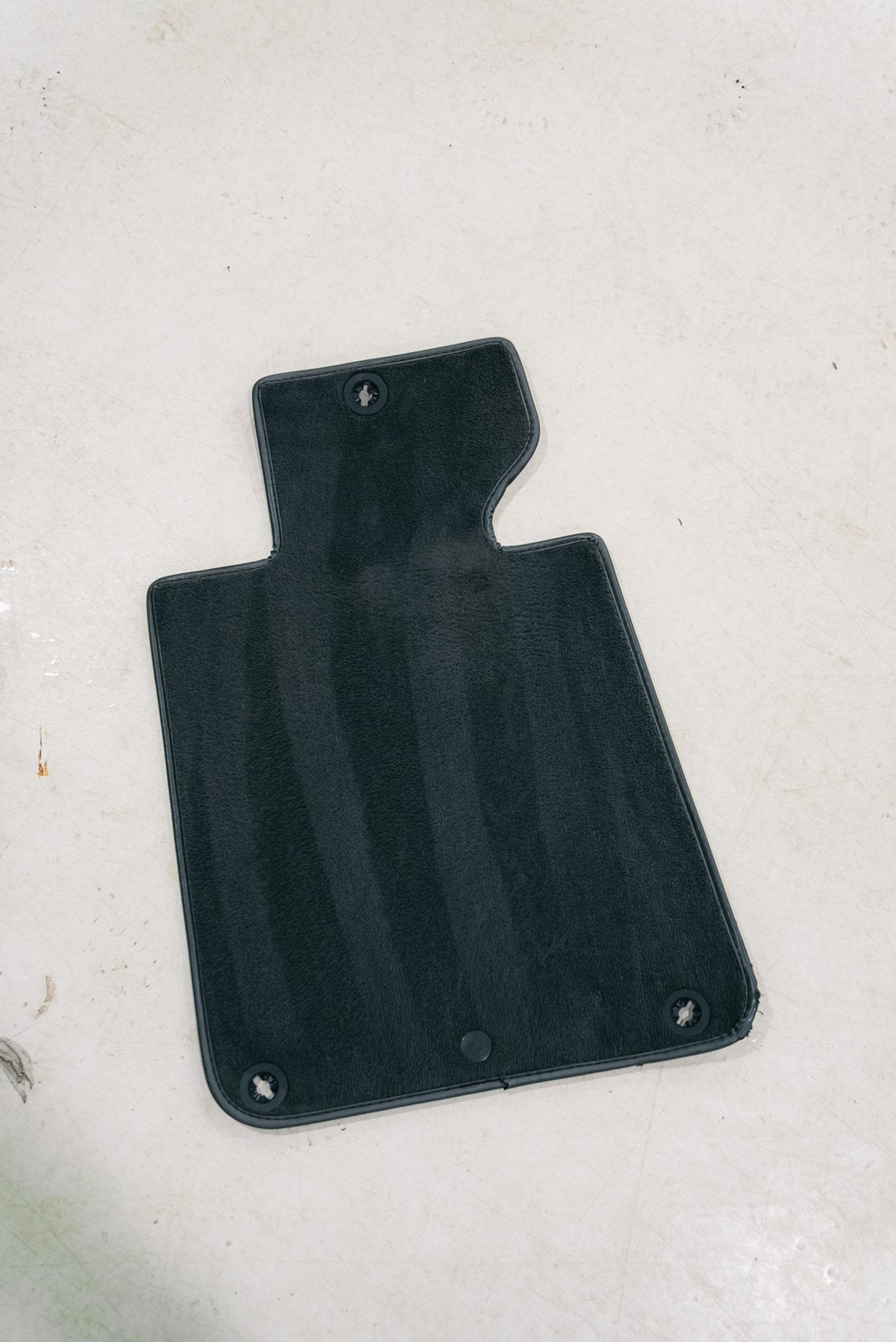
A removable carpet mat is a good place to see the sequence clearly. Take it out, shake loose grit away from the car, then vacuum from more than one direction. The heel area usually holds grit below the surface, while the bound edge tends to trap fine dust. Set the mat on a clean surface so the underside doesn’t pick up grit that will be carried straight back into the footwell.
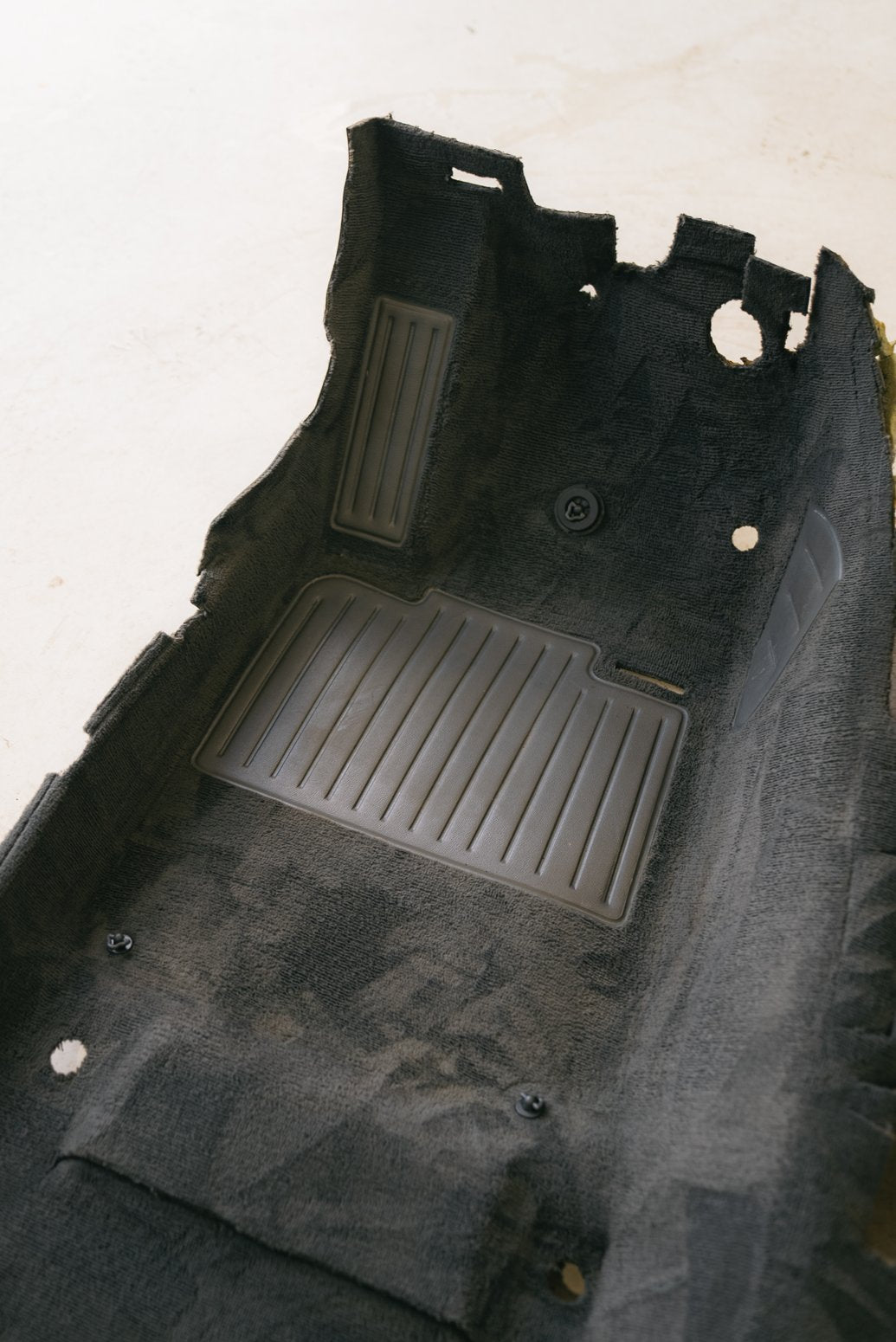
Use FabricCleaner on compatible carpet and work in sections small enough to recover the solution. A brush can separate fibres and bring embedded soil within reach of the towel or extractor. Keep bristles appropriate to the pile. If the carpet starts to fuzz, twist or change texture, stop brushing. A cleaner appearance is of little value if the fibres have been permanently roughened.
Installed carpet needs more restraint than a removable mat. Liquid can run beneath a seat rail or into padding where you can’t easily recover it. A damp patch that keeps coming back after rain or snow deserves an investigation into the source of the water. If a whole footwell is wet below the carpet, cleaning the visible pile alone will leave the underlying problem in place.
When is an upholstery extractor worth using?
An extractor helps when the amount of dissolved soil exceeds what a few towels can pick up. A heavily used family-car footwell, for example, can keep transferring brown residue even after the surface looks better. GYEON allows FabricCleaner to be used as a pre-spray for extraction. Follow the machine’s instructions for what belongs in its solution tank. A product suitable for pre-treating upholstery is not automatically intended for every tank or machine.
We suggest working one small section through to recovery before moving on. Control the amount of water introduced, then make additional recovery passes with the spray off where your machine allows. Watch how much moisture is coming back. On fitted upholstery, continuing to inject water until the recovery tank looks perfectly clear can soak the cushioning. Set a practical stopping point and allow a full dry-down before deciding whether more work is justified.
Consider the opposite example too. There’s a thumbnail-sized coffee splash on an otherwise clean passenger seat. A clean towel lifts most of it immediately. Pulling out an extractor and wetting the entire cushion may create a bigger drying job than the original spill. We’d start small, check the result dry and only step up if there is still something to remove.
Why does the stain come back after drying?
A returning mark can come from deeper in the material. As the surface dries, moisture can travel upward carrying residue from below. This is commonly called wicking. You might see a spot look clean in the garage in the afternoon and dark again the following morning. Take a photo of the dry mark before treating it again so you can compare its size and position.
A different pattern calls for a different response. A faint line around the whole area you wetted points you toward uneven cleaning or drying. A tacky patch suggests something remains in the fabric. An odour that persists beneath a visually clean surface may mean the spill reached padding. Once repeated light treatment stops changing the result, we recommend getting the upholstery assessed before adding more moisture or stronger chemistry.
Should you protect fabric after cleaning?
Protection is optional. First make sure the textile is clean, free of residue and dry all the way through. On suitable woven upholstery, GYEON Q² FabricCoat is a separate finishing step that can make future spills easier to manage. Check compatibility on a hidden area and follow its ventilation, application and drying directions. Plan that time in addition to the time already needed to dry the upholstery after cleaning.
Think about where protection would earn its keep. A frequently used cloth passenger seat might justify it. A removable mat that regularly fills with gravel may benefit more from frequent vacuuming. For either surface, a prompt blot after a spill is still valuable. Protection can give you an opportunity to collect a liquid before it settles deeper into the textile.
Questions about cleaning car upholstery
Can I use the same cleaner on cloth and leather?
Check the exact material and choose the appropriate cleaner for each section. FabricCleaner is our textile choice here. For coated automotive leather, we suggest a dedicated compatible leather cleaner. Keeping separate towels for the two jobs also prevents you from transferring residue across the seam between materials.
Can I use this method on a child’s car seat?
A vehicle’s built-in cloth seat and a removable child restraint have different care requirements. For a child restraint, follow its specific manufacturer’s instructions for the cover, harness and hardware. Keep detailing chemicals off harness webbing unless the restraint maker explicitly permits the product and method.
What should I do about winter salt on a floor mat?
Start by removing dry crystals and loose grit. Inspect what remains, use a compatible textile cleaning method, and recover the dissolved residue. Persistent salt deposits can need a dedicated compatible treatment. Check the backing and surrounding carpet for moisture too. A dry-looking mat reinstalled over a damp footwell can leave you with the same issue the following week.
What information helps us recommend the next step?
Tell us the material, what caused the spill if you know, which products you’ve already used, and whether the mark changes when dry. A photo taken after drying is more useful than one of a wet seat. With those details we can help you decide whether another light clean, better recovery or a professional assessment makes sense.