


How to Remove Brake Dust From Alloy Wheels Safely
CARZILLA Detailing Guides · 8 minute read · Photography by GYEON
To remove brake dust from alloy wheels, we start with a cool wheel, identify its finish, then choose the mildest wash that will lift the dirt. For stubborn brake dust on a compatible finish, apply a dedicated iron-reactive wheel cleaner, let it work while wet, gently agitate where needed and rinse thoroughly. Check the dry wheel before treating it again. A patch of damaged clear coat can resemble a stain, and more wheel cleaner won’t repair it.
A wheel can have a bright face and still carry a surprising amount of dark residue behind the spokes. That distinction matters when you buy a cleaner. An easy maintenance wash on a coated five-spoke wheel is a different job from cleaning the inner barrel of a winter wheel that hasn’t seen a brush in months. Here’s how we decide what to use and when to put the brush down.
What is the dark dust on my wheels?
Normal brake wear produces fine particles, some of which contain iron. These mix with road film, ordinary dirt and deposits from the driving environment. Wheel faces show the result, particularly on a light finish. The front and rear wheels may accumulate different amounts depending on the vehicle and use. The darker wheel isn’t automatically the one with the worse finish.
During a clean, loose dust can rinse off easily while more firmly attached iron remains. That explains why a wheel can improve with shampoo and still have small dark specks. Dirt can also collect in corners where the wheel face meets a spoke. Inspect one of those areas under good light. If you can see an actual chip, peeling clear coat, pitting or corrosion, separate that issue from removable contamination before choosing a stronger treatment.
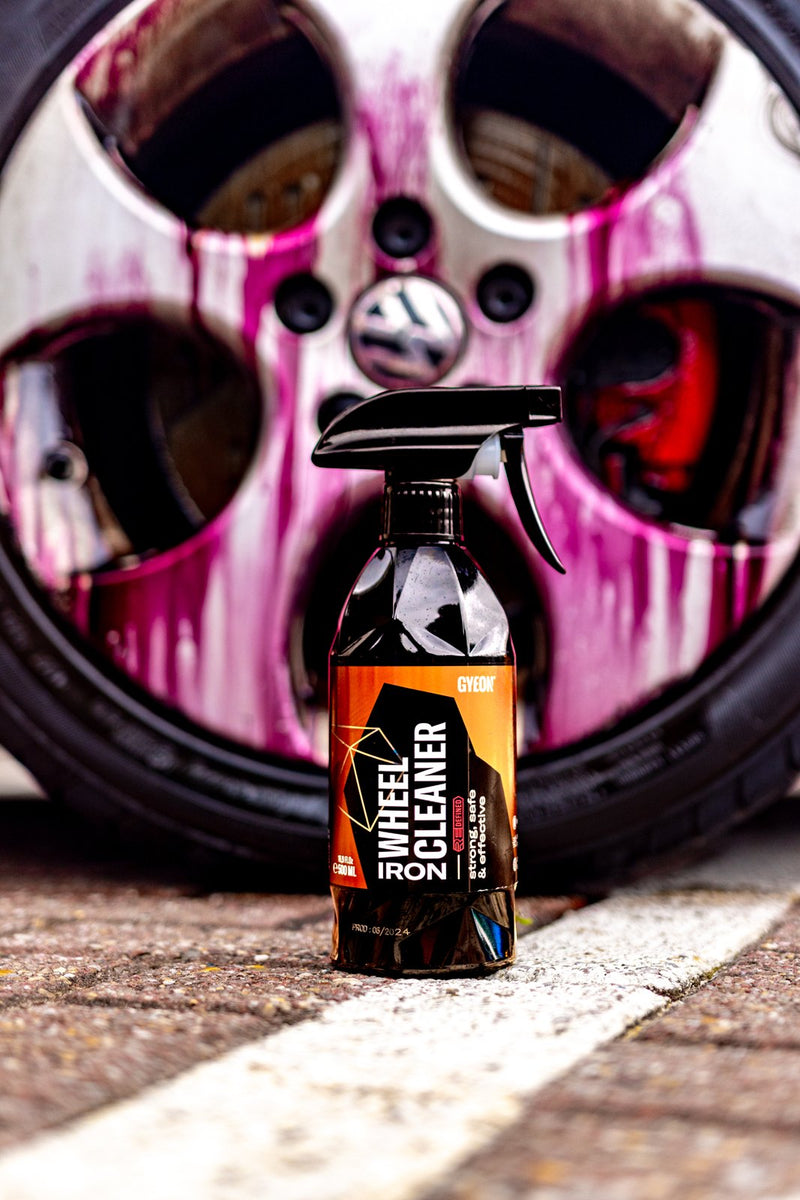
Purple runoff is useful for identifying a reaction with ferrous material. It tells you something is reacting where the product reached. The depth of the colour isn’t a score for the total cleanliness of the wheel. The reaction can be difficult to see on black paint, and ordinary road grime may need gentle agitation even where there’s little purple colour. Use the condition of the rinsed surface to decide whether the wash is complete.
Which wheel cleaner should you use?
On a maintained wheel with light road dirt, a compatible maintenance shampoo and dedicated soft wash media may be enough. We’d try that first if the wheel was recently cleaned and the dust is loose. It keeps routine washes simple. Where stubborn brake dust remains, GYEON Q²M Iron WheelCleaner REDEFINED combines general wheel cleaning with a reaction that targets iron contamination. Its gel helps the product stay on the wheel while it works.
There is a practical difference between that product and GYEON Q²M Iron REDEFINED. Iron WheelCleaner is the dedicated choice when your job is cleaning grime and brake dust from wheels. Iron REDEFINED is a fallout remover for compatible surfaces including paint and wheels. We wouldn’t automatically use both on the same wheel during the same wash. Let the first suitable treatment do its job, rinse it fully and see what remains.
On ceramic-coated wheels, the coating maker’s aftercare directions still apply. When light dust releases during a gentle wash, a deeper chemical clean can wait. If the finish is bare polished metal, damaged, freshly refinished or unfamiliar, confirm compatibility with the finish supplier before you proceed. Neutral pH is one piece of product information. It can’t tell you whether a specific repair has cured or whether the clear coat is lifting at a stone chip.
The wheel tools we’d put beside the bucket
Choose soft tools that fit the wheel you actually own. A dedicated mitt or microfibre can clean an open spoke face. A suitable GYEON wheel brush can reach between spokes where there is enough clearance. A large brush that wedges between the wheel and a brake caliper is the wrong size for that space. Use a smaller compatible tool or leave the inaccessible area for a suitable service opportunity.
Reserve your wheel media for wheels. Keep a separate brush for tyres, which can pick up old dressing and heavier grime. Lay out the hose and a dedicated drying cloth before applying cleaner. If you need to go searching for a nozzle while product is dwelling on a black wheel in the sun, the wheel may dry faster than you expect. We like having the rinse ready before the first spray.
How to remove brake dust one wheel at a time
1. Let the wheels and brakes cool
Park out of direct sun and give the wheels time to cool after driving. Dark wheels can heat up again even when the vehicle has been parked. Choose a place where you can rinse each one thoroughly. For unusual brake systems, including carbon-ceramic brakes, check the vehicle or brake manufacturer’s instructions on compatible wheel chemicals before applying them near the braking hardware.
2. Inspect and remove loose material
Look at the valve stem area, lug recesses, spoke edges and the accessible inner barrel. Remove loose grit with water as appropriate for the product directions. Avoid dragging a dry towel across a dusty wheel to see how dirty it is. If a centre cap or refinished edge is flaking, don’t direct a strong jet at the damaged edge. Identify that area before you begin so you can work around it.
3. Apply cleaner where the contamination is
Use Iron WheelCleaner REDEFINED as directed on the bottle. Work one cool wheel at a time and cover the face, corners and accessible barrel that need cleaning. Apply an even amount so the cleaner can contact the deposits. Repeatedly soaking the ground below the wheel does little for residue on the back of a spoke. Avoid deliberate application to braking friction surfaces and follow the vehicle’s care instructions.
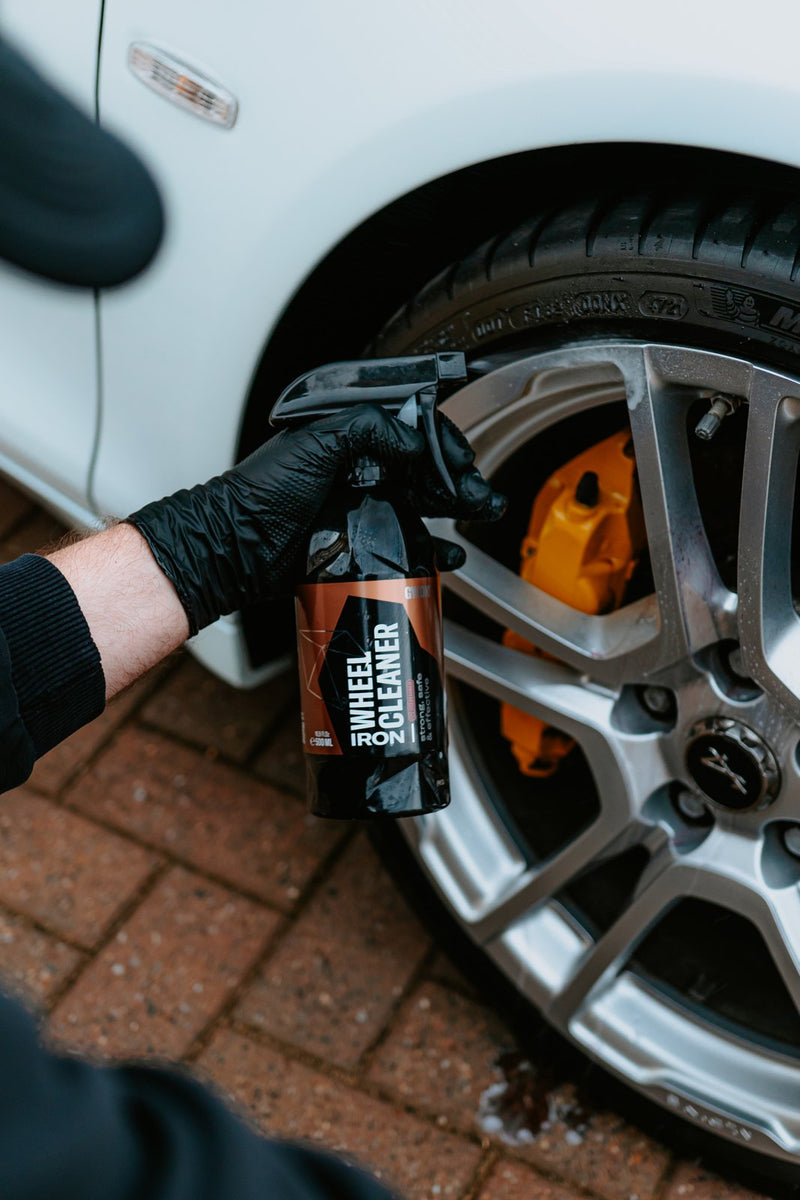
4. Watch the surface while the product works
Allow the cleaner to react while it stays wet. Follow the bottle’s dwell guidance and rinse sooner if an area starts drying. A spoke in sunshine can dry while the recessed barrel is still wet. You don’t need to wait for the entire wheel to turn purple. On a lightly contaminated or dark wheel, you might see most of the colour in the first runoff rather than on the face itself.
5. Agitate gently where needed, then rinse
If grime remains on compatible surfaces, use a clean, lubricated wheel brush or mitt with light pressure. Reach behind a spoke only as far as your tool can pass freely. Clean the face with media you can see and control. Rinse the tool often. If you hear a gritty scraping sound or the brush picks up debris, stop and clean the tool before continuing.
Rinse the wheel generously, including the corners, bolt recesses and the inner barrel within reach. Work around the wheel from another angle so you don’t leave cleaner hidden behind spokes. Check the adjacent tyre and bodywork for overspray. When the rinse runs clear, gently dry the accessible finish with dedicated clean media. Compare the problem area in good light before committing to another application.
What if black specks remain after washing?
Inspect the shape and location of the specks. Scattered iron deposits, sticky tar flecks and a physical pit can all look dark against a silver finish. A suitable iron treatment addresses ferrous material. If controlled cleaning improves the area, inspect again before deciding whether a second local treatment is warranted. If the finish has a crater or a missing edge of coating, further iron remover will leave that defect in place.
The inside barrel can look less uniform than the wheel face. It sees different exposure, has less room for a tool and may have a different surface texture. Trying to make it look identical to the painted face can encourage excessive scrubbing. If removing the wheel would be necessary for proper access, arrange safe wheel-off service where appropriate. Routine maintenance can concentrate on the areas you can reach without forcing tools past a caliper.
For persistent black residue, tell us what the wheel is made of, whether it is coated or refinished, and what has already been used. A photo of the dry finish, plus a wider photo of the wheel design, helps us assess what the cleaner and brush could reasonably reach. It’s easy to spend money on stronger chemistry when the real issue is access or finish damage.
Keeping wheels cleaner between details
Once the wheel is clean, regular maintenance can keep a light deposit from becoming a more involved job. Pick an interval that suits the dust your brakes actually produce. A commuter with heavy stop-and-go use may need attention sooner than a weekend car. If the wheel generally cleans up with shampoo, reserve the reactive cleaner for the occasions that justify it.
For suitable wheels, GYEON Q² Rim EVO is a separate ceramic coating option that can make later cleaning easier. Coating requires proper preparation and curing according to its instructions. It won’t stop brakes producing dust or repair a stained finish. We’d decide on coating after you’ve inspected clean wheels and established whether you can give the application the time and access it needs.
Brake dust questions
Can I use tyre cleaner on the wheel face?
Tyre cleaners target soil and old dressing on rubber. Choose a product specifically compatible with the wheel finish for the wheel itself. Keep the brushes distinct too. A stiff tyre brush useful on a sidewall may mark a glossy wheel face, especially when loaded with grit.
Should I scrub baked-on brake dust with a kitchen pad?
We’d avoid abrasive household pads on a finished wheel. They can change the gloss and leave marks long after the original dirt is gone. Check the finish, test the appropriate cleaner and use a soft dedicated tool. If deposits remain stubborn, inspect them dry or have a wheel specialist assess them.
Will wheel cleaner fix one wheel that suddenly gets much dustier?
Cleaning removes what has collected and gives you a fresh surface to observe. An abrupt change on one wheel, especially alongside unusual heat, smell or braking behaviour, deserves inspection by a qualified mechanic. If you’d like to see how the cleaner looks on a real wheel, our Golf GTI wash-day story shows the application in context.